Roof Hail Damage Inspection: What Actually Matters After a Storm
Hail damage is rarely obvious at first glance.
That’s the problem.
Most homeowners expect hail to punch holes through shingles or leave dramatic destruction behind. In reality, the most expensive hail damage is subtle. It compromises materials slowly, then shows up months later as leaks, granule loss, or shortened roof life.
And if you don’t take care of it right away – you could have a problem later, but the time has already passed to file an insurance claim.
A proper roof hail damage inspection is not about whether your roof “looks fine.” It’s about whether the system can still do its job after impact.
Why Hail Damage Is Often Missed
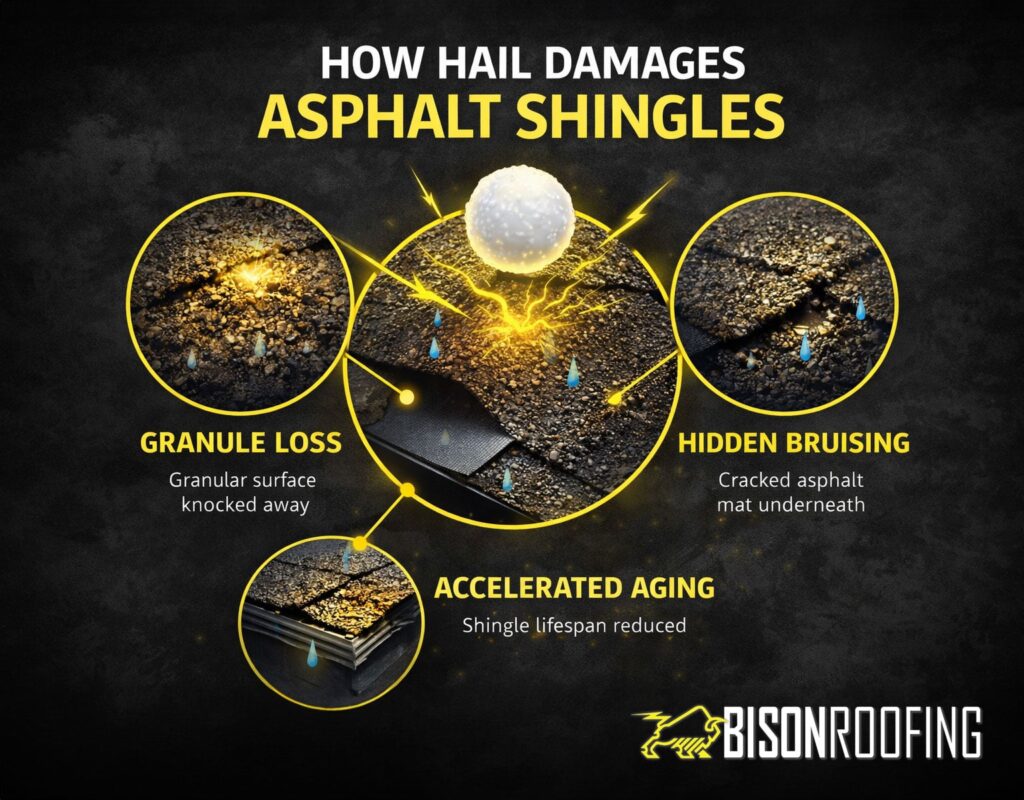
Hail doesn’t have to shatter shingles to cause real damage. It can:
• Knock protective granules loose
• Create bruising beneath the surface
• Crack matting without breaking through
• Damage soft metals and flashing
• Accelerate aging in areas already under stress
From the ground, the roof may look unchanged. From the roof, the story is often very different.
What a Real Roof Hail Damage Inspection Includes
A real inspection is methodical. It looks for patterns, not just marks.
The focus is on areas that absorb impact differently and reveal damage faster over time. This includes the full roof surface, transitions, and components that don’t bounce back after impact.
Inspectors look for consistency. Random marks usually mean wear. Repeating marks with similar size and spacing point to hail.
Shingles Tell a Story If You Know How to Read Them
Hail bruising doesn’t always break shingles open. Often it compresses the asphalt and damages the mat underneath.
Key signs include:
- Soft spots beneath the shingle surface
- Granule displacement in circular patterns
- Darkened areas where granules were knocked away
- Fractures that don’t fully penetrate the shingle
These issues weaken the shingle’s ability to shed water and protect the underlayment. Over time, heat and weather finish the job hail started.
Soft Metals Show Damage First
Metal components don’t hide hail damage well. That’s a good thing.
During inspections, experienced roofers pay close attention to:
- Vent caps
- Flashing
- Gutters and downspouts
- Drip edge
Dents and impact marks here help confirm hail size, direction, and severity. These components also play a critical role in water control, so damage here matters even if shingles appear intact.
Why Timing Matters More Than Most Homeowners Think
Waiting after a hailstorm can cost you.
Hail damage that isn’t addressed early often gets misclassified later as normal wear and tear. Insurance coverage becomes harder to secure. Repairs become more expensive. Small issues turn into system failures.
A timely inspection documents conditions while the damage is fresh and easier to verify.
Insurance Claims Depend on Documentation, Not Opinions
Insurance adjusters rely on evidence.
A strong hail damage inspection includes:
- Clear photo documentation
- Identifiable impact patterns
- Condition comparisons across slopes
- Notes on age and pre-storm condition
This isn’t about inflating claims. It’s about accuracy. Without proper documentation, legitimate damage can be overlooked or denied.
Why “No Leaks Yet” Is Not a Green Light
Many hail-damaged roofs don’t leak right away. That doesn’t mean they’re fine.
Hail often shortens the lifespan of roofing materials. The roof may keep water out for now, but its ability to handle future storms, heat, and freeze-thaw cycles is compromised.
Inspections focus on future performance, not just current leaks.
When Repairs Make Sense and When Replacement Is Smarter
Not all hail damage means a full replacement. Some roofs can be repaired effectively.
A professional inspection helps determine:
- Whether damage is isolated or widespread
- If repairs will restore full performance
- Whether replacement is the more cost-effective long-term option
Guessing wrong here costs money later.
What Sets a Strong Hail Inspection Apart
The best inspections aren’t rushed. They’re thorough, unbiased, and grounded in experience.
They look at the roof as a system. They explain findings clearly. They help homeowners understand options without pressure.
Why Homeowners Choose Bison Roofing
Bison Roofing approaches hail damage inspections with a calm, methodical mindset. The goal is clarity, not chaos.
Their inspections emphasize:
- Honest assessments based on real conditions
- Clear documentation homeowners can actually understand
- Experience working through hail-related repairs and claims
- A focus on long-term roof performance, not quick fixes
Hail storms are stressful enough. Knowing where your roof truly stands makes the next steps simpler and smarter.
If your area has seen hail recently, a professional roof hail damage inspection is the best place to start.